
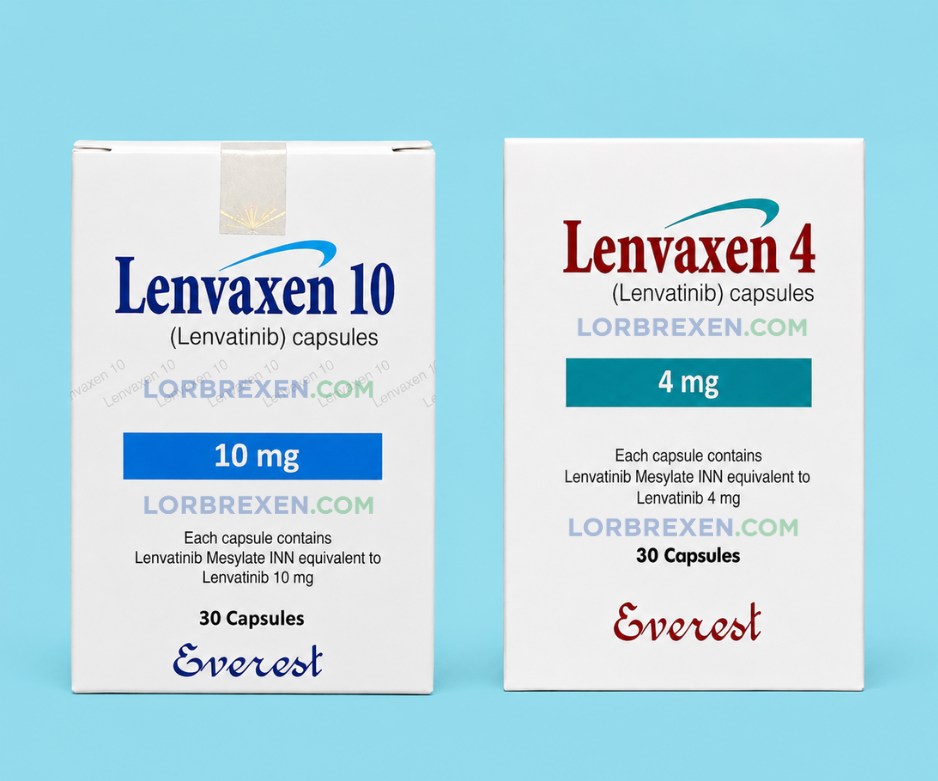
Lenvaxen thyroid cancer treatment is a topic of interest for patients and caregivers researching lenvatinib, an oral targeted cancer medicine. Lenvaxen is marketed as a lenvatinib product by Everest Pharmaceuticals; the exact formulation, registration, and availability should be verified against the packaging and applicable regulatory records.
Lenvatinib is used to treat certain adults with progressive, locally recurrent or metastatic differentiated thyroid cancer that is resistant to radioactive iodine (RAI). It is not intended for every type of thyroid cancer, and it is not a routine first treatment for every thyroid tumor.
This guide explains how Lenvaxen works, when an oncologist may consider lenvatinib, what patients should know about dosage and side effects, and how to approach prescription-based access safely. Treatment decisions should always be made with the patient’s oncology team.
What Is Lenvaxen?
Lenvaxen is a brand name associated with lenvatinib, a prescription anticancer medicine belonging to the tyrosine kinase inhibitor (TKI) class.

Lenvatinib inhibits several receptor tyrosine kinases involved in angiogenesis, the process through which tumors develop new blood vessels. Its targets include vascular endothelial growth factor receptors (VEGFRs) and fibroblast growth factor receptors (FGFRs), among other kinases.
By interfering with these signaling pathways, lenvatinib can slow tumor growth and disease progression in selected cancers.
Key medicine facts
| Feature | Information |
|---|---|
| Brand | Lenvaxen |
| Active medicine | Lenvatinib, formulated as lenvatinib mesylate |
| Drug class | Multikinase inhibitor |
| Form | Oral capsules; verify the exact marketed product. |
| Thyroid cancer indication | Selected cases of progressive, locally recurrent or metastatic, radioactive iodine-refractory differentiated thyroid cancer |
| Prescribing professional | Qualified clinician, typically an oncologist |
| Monitoring | Regular clinical assessment, blood pressure checks, laboratory testing, and evaluation for adverse effects |
Product strengths, pack sizes, manufacturer details, and registration status must be confirmed for the specific market and product being supplied.
Understanding Thyroid Cancer
The thyroid is a small, butterfly-shaped gland in the front of the neck. It produces hormones that help regulate metabolism, energy use, and other body functions.
Thyroid cancer develops when abnormal cells grow in the gland. The major types include papillary, follicular, medullary, and anaplastic thyroid cancer.
Common symptoms of thyroid cancer
Some thyroid cancers cause no symptoms early on. Others may produce:
- A lump or swelling in the neck
- Persistent hoarseness or voice changes
- Difficulty swallowing
- Difficulty breathing
- Neck discomfort or pressure
- Enlarged lymph nodes in the neck
These symptoms do not automatically indicate cancer. A healthcare professional may recommend a physical examination, thyroid ultrasound, biopsy, blood tests, and other investigations as appropriate.
Seek urgent medical assessment for significant breathing difficulty or rapidly worsening neck swelling. Do not use an anticancer medicine to self-treat an undiagnosed lump.
Why thyroid cancer type matters
Papillary and follicular cancers are forms of differentiated thyroid cancer (DTC). Many patients with these cancers can be treated successfully with surgery, radioactive iodine when indicated, and thyroid hormone management.
Medullary and anaplastic thyroid cancers have different biological characteristics and treatment pathways. Lenvatinib’s DTC indication should not be interpreted as an indication for every thyroid cancer subtype.
How Does Lenvatinib Work for Thyroid Cancer?
Cancer growth depends on multiple biological signals. Some tumors stimulate the development of blood vessels that supply oxygen and nutrients. Other signaling pathways contribute to cell growth and survival.
Lenvatinib blocks selected kinase receptors involved in these processes, including VEGFR and FGFR pathways. This targeted action can reduce tumor activity in susceptible cancers.
Unlike conventional cytotoxic chemotherapy, lenvatinib is classified as targeted therapy. However, targeted does not mean harmless: it can affect normal body functions and cause serious adverse reactions.
What does “radioactive iodine-refractory” mean?
Radioactive iodine therapy is used for appropriate differentiated thyroid cancers because thyroid cells can absorb iodine. Some tumors stop taking up sufficient iodine or continue progressing despite radioactive iodine treatment.
This is called radioactive iodine-refractory disease. Clinicians determine whether a tumor meets this definition using its clinical history, imaging, disease progression, and other relevant findings.
Lenvatinib may be considered when the disease is progressive, locally recurrent or metastatic, and no longer appropriately controlled by radioactive iodine. Not every patient with residual thyroid cancer needs immediate systemic treatment.
Who May Benefit from Lenvaxen?
Under the U.S. prescribing indication for lenvatinib, eligible adults have locally recurrent or metastatic, progressive, radioactive iodine-refractory differentiated thyroid cancer.
The decision depends on more than a diagnosis alone.
An oncologist may assess:
- The precise pathological thyroid cancer subtype
- Whether the disease has progressed on imaging
- Whether it has spread or returned locally
- Previous surgery and radioactive iodine treatment
- The rate of tumor growth and symptoms
- Blood pressure and cardiovascular health
- Kidney and liver function
- Other medicines and potential interactions
- The patient’s overall health and treatment preferences
Lenvatinib may not be appropriate for a patient whose disease is stable, whose cancer remains responsive to other treatment, or whose health risks outweigh the expected benefit.
Can Lenvaxen treat every thyroid cancer?
No. The established DTC indication is specific. Medullary thyroid cancer, anaplastic thyroid cancer, and other thyroid malignancies require their own assessment and treatment strategies.
Molecular testing may identify other targeted treatment options in certain cancers. The treatment plan should be based on tumor type, relevant molecular findings, disease behavior, and applicable prescribing guidance.
Lenvaxen Dosage and Administration
Never determine your dose from the capsule strength or an online product listing.
For adults treated for differentiated thyroid cancer, the standard starting dose in the U.S. prescribing information for lenvatinib is 24 mg orally once daily. The treating clinician may change or interrupt the dose according to tolerability, adverse reactions, organ function, and the applicable product label.
This is general prescribing information, not an individualized recommendation for Lenvaxen or any particular patient.
Why are 4 mg and 10 mg capsules different from the prescribed dose?
A capsule strength describes the amount of medicine in one capsule. It does not establish the total daily dose.
A prescription may require a combination of capsule strengths. Patients should follow the exact instructions from their oncology team and pharmacist and should never calculate or change their dose independently.
General administration precautions
- Take the medicine according to the prescribed schedule.
- Follow the product-specific instructions for taking it with or without food.
- Ask a pharmacist before altering the capsule or preparing a liquid mixture.
- If you miss a dose, follow the instructions supplied with your prescribed product or contact your pharmacist. Do not double the next dose.
- If vomiting occurs after a dose, ask your care team what to do rather than automatically taking another dose.
- Do not stop treatment or reduce the dose without medical guidance, except when emergency clinicians instruct you otherwise.
The official prescribing information should be consulted for complete, product-specific administration instructions.
Lenvaxen Side Effects and Safety Warnings
Lenvatinib can cause common side effects and potentially life-threatening complications. Early reporting helps the oncology team decide whether supportive care, a treatment interruption, or a dose adjustment is needed.
Common side effects
Possible effects include:
- High blood pressure
- Diarrhea
- Fatigue or weakness
- Decreased appetite and weight loss
- Nausea or vomiting
- Mouth sores
- Abdominal discomfort
- Hoarseness or voice changes
- Hand-foot skin reactions
- Protein in the urine
- Changes in thyroid function
Not everyone experiences the same effects. Their severity and timing can vary.
Serious side effects that need prompt assessment
Lenvatinib can cause hypertension, kidney problems, liver injury, bleeding, cardiac complications, blood clots, gastrointestinal perforation or fistula, QT interval prolongation, and impaired wound healing.
Seek emergency medical care for symptoms such as:
- Chest pain, severe shortness of breath, or sudden weakness on one side
- Severe or persistent abdominal pain
- Major bleeding, vomiting blood, or black, tarry stools
- A seizure, sudden confusion, or sudden vision changes
- A severe headache accompanied by neurological or visual symptoms
- Severe breathing difficulty or signs of a serious allergic reaction
Contact the oncology team promptly about severe diarrhea, reduced urine output, persistent vomiting, worsening swelling, jaundice, uncontrolled blood pressure, or other significant new symptoms. If symptoms are severe, do not wait for a routine appointment.
Pregnancy and breastfeeding
Lenvatinib may harm an unborn baby. Discuss pregnancy risks, contraception, and fertility with the treating clinician before treatment begins. Follow the current product-specific instructions regarding contraception during treatment and after the final dose.
Breastfeeding is not recommended during treatment and for the period specified in the current prescribing information after the last dose.
Monitoring, Precautions, and Drug Interactions
Safe treatment requires regular follow-up, even if the patient initially feels well.
What monitoring may be needed?
| Assessment | Why it matters |
|---|---|
| Blood pressure | Detects and manages treatment-related hypertension |
| Urine protein | Helps identify kidney-related complications |
| Kidney function | Assesses renal impairment and complications from dehydration |
| Liver function | Detects possible liver injury |
| Electrolytes and calcium | Identifies abnormalities that may require treatment |
| Thyroid function | Supports appropriate thyroid hormone management |
| Weight and hydration | Helps assess appetite loss, diarrhea, and fluid balance |
| ECG when indicated | Assesses QT interval and relevant cardiac risk |
| Dental health | Supports assessment of jaw complications and wound healing |
| Tumor imaging | Evaluates response or progression according to the oncology plan |
The frequency of testing depends on the patient’s health, treatment stage, previous results, and clinical judgment.
Drug interactions
Tell the oncology team about every prescription medicine, over-the-counter product, vitamin, and herbal supplement you take.
Particular attention may be needed for medicines that affect heart rhythm, blood pressure, bleeding risk, or electrolyte balance. Do not stop a prescribed medicine simply because you suspect an interaction; ask the clinician or pharmacist to review the combination.
Before planned surgery or invasive dental procedures, tell the relevant clinician that you are taking lenvatinib. The oncology team may need to plan a treatment interruption because of impaired wound healing risk.
Lenvaxen Compared With Other Thyroid Cancer Treatments
Treatment choice depends on the cancer subtype, stage, progression, prior therapy, tumor characteristics, and patient health.
| Treatment | General role | Key consideration |
|---|---|---|
| Surgery | Removes the primary tumor or selected recurrent disease | Often central to treatment when surgery is appropriate |
| Radioactive iodine | Treats eligible iodine-avid differentiated thyroid cancer | Not effective for tumors that no longer respond to iodine |
| Thyroid hormone therapy | Replaces hormone and may suppress TSH when indicated | Requires appropriate laboratory monitoring |
| Lenvatinib | Targeted systemic therapy for selected progressive RAI-refractory DTC | Requires close monitoring for adverse effects |
| Sorafenib | Another multikinase inhibitor for selected RAI-refractory DTC | Different adverse-effect profile and treatment considerations |
| Cabozantinib | An option in selected patients after prior VEGFR-targeted therapy, subject to the relevant indication | Eligibility and sequencing require specialist review |
| Radiation therapy | Used for selected local disease or symptom control | Depends on location, symptoms, and treatment goals |
| Clinical trials | May offer access to emerging treatment strategies | Eligibility and availability vary |
These therapies are not interchangeable. Lenvatinib should not be selected solely because it is available or because another patient has responded to it.
The National Cancer Institute discusses evidence and treatment options for differentiated thyroid cancer.
Lifestyle and Supportive Care During Treatment
Lifestyle measures cannot replace cancer treatment, but they can support general well-being.
Practical recommendations
- Maintain hydration: Diarrhea and vomiting can lead to dehydration. Seek advice if you cannot keep fluids down or urine output decreases.
- Eat manageable, nutritious meals: If appetite or weight declines, ask your care team about a dietitian or individualized nutritional support.
- Monitor blood pressure: Use the schedule recommended by your clinician and report readings according to the agreed plan.
- Protect your skin: Discuss moisturizers, hand-foot symptoms, and skin changes with your care team.
- Maintain oral hygiene: Arrange appropriate dental care and inform your dentist about lenvatinib before procedures.
- Stay active as tolerated: Choose activity suited to your energy level, balance, and medical condition.
- Keep a symptom record: Record new symptoms, medicines taken, blood pressure readings, and questions for appointments.
Avoid starting supplements, restrictive diets, or herbal products marketed as cancer cures. Discuss complementary therapies with your oncology team because some products may interact with treatment or delay necessary care.
Obtaining Prescribed Lenvaxen Safely
Patients who have been prescribed Lenvaxen may need to confirm the exact formulation, strength, quantity, and supplier availability.
Before ordering, consider the following:
- Verify the prescription: Ensure the medicine and dose match the current prescription from your treating clinician.
- Check the supplier: Confirm the applicable pharmacy or supplier authorization and whether cross-border supply is lawful.
- Verify the product: Check the manufacturer, packaging, batch number, expiry date, and registration information where applicable.
- Confirm the supply terms: Request written information about stock, price, delivery estimates, shipping conditions, and refund or damaged-product procedures.
- Protect your information: Use a documented, privacy-conscious process for submitting prescriptions and patient information.
- Ask about storage: Follow the actual product’s packaging and official instructions. Do not assume all brands or shipping arrangements have identical requirements.
A low price, professional-looking website, or claim of international delivery does not independently establish medicine authenticity or regulatory compliance.
Prescription requirements and import rules vary by country. A supplier should explain the applicable process before accepting an order.
Expert Recommendations
For patients and caregivers researching Lenvaxen, the most important steps are to confirm the diagnosis and treatment indication, understand the prescribed dose, establish a monitoring plan, and know when to seek urgent medical help.
For publishers and medicine suppliers, medical content should be reviewed by a qualified professional, reference current prescribing information, and distinguish verified product details from unsubstantiated marketing claims. Product access should support—not replace—the relationship between patients and their oncology team.
Conclusion
Lenvaxen for thyroid cancer refers to lenvatinib treatment for a specific group of patients with progressive, radioactive iodine-refractory differentiated thyroid cancer. It is a targeted therapy that may help control disease, but it is not appropriate for every thyroid cancer patient and can cause serious adverse reactions.
Understanding eligibility, dosage safety, monitoring, and treatment alternatives helps patients make informed decisions with their clinicians. Before obtaining Lenvaxen, verify the exact prescribed product, supplier credentials, and applicable prescription requirements.