
| Parameter | Clinical Specification |
|---|---|
| Active Pharmaceutical Ingredient (API) | Lenvatinib Mesylate INN (equivalent to 4 mg Lenvatinib free base) |
| Innovator Reference Drug | Lenvima® (Eisai Co., Ltd. / Merck & Co.) |
| Manufacturer | Everest Pharmaceuticals Ltd. |
| Pharmacological Class | Multi-Targeted Receptor Tyrosine Kinase (RTK) Inhibitor / Anti-Angiogenic |
| Primary Molecular Targets | VEGFR1 (FLT1), VEGFR2 (KDR), VEGFR3 (FLT4), FGFR1–4, PDGFRα, KIT, RET |
| Primary Clinical Uses | Differentiated Thyroid Cancer (DTC), Hepatocellular Carcinoma (HCC), Advanced Renal Cell Carcinoma (RCC), Advanced Endometrial Carcinoma (EC) |
| Role of the 4 mg Formulation | 1. Weight-based primary dosing in HCC (<60 kg takes 8 mg/day; ≥60 kg takes 12 mg/day) 2. Step-down dose adjustments for managing Grade 2/3 adverse toxicities 3. Combination regimens requiring multi-capsule increments |
| Administration Route | Oral capsule, taken once daily with or without food |
| Regulatory Status | Prescription Only Medicine (POM/RX-Only) |
Understanding Lenvaxen 4 mg
Receiving a diagnosis of advanced or progressive cancer is one of the most challenging moments a patient and their family can ever navigate. When standard interventions such as surgical resection, traditional cytotoxic chemotherapy, or radioactive iodine no longer arrest disease progression, modern oncology turns toward precision-targeted therapeutics.
Lenvaxen 4 mg represents a critical advancement in accessible targeted cancer therapy. Containing lenvatinib mesylate, Lenvaxen is the high-quality bioequivalent generic formulation of the innovator medicine Lenvima®. Rather than nonspecifically attacking all rapidly dividing cells throughout the body—as conventional chemotherapy does—Lenvaxen functions as a multi-kinase inhibitor. It selectively halts the aberrant vascular signaling pathways and enzymatic switches that solid tumors depend upon to construct their blood supply and multiply.

While Lenvaxen is formulated in both 10 mg and 4 mg strengths, the 4 mg capsule plays a unique, specialized, and life-preserving role in clinical practice. It serves as the fundamental titration building block that allows medical oncologists to tailor therapies precisely to a patient’s body weight, kidney or liver function, and individualized tolerance profile.
In this comprehensive guide, we unpack the approved uses of Lenvaxen 4 mg, evaluate the underlying molecular mechanisms, detail clinical dosing and step-down schedules, offer actionable side-effect strategies, and clarify the legal, verified pathways for accessing authentic medication.
What Is Lenvaxen 4 mg and How Does It Work?
To understand the therapeutic efficacy of Lenvaxen, one must understand how aggressive solid tumors survive and expand.

The Angiogenesis Cascade
As solid tumors grow beyond 1 to 2 millimeters in diameter, their core becomes hypoxic (deprived of oxygen). To survive, tumor cells release chemical signaling proteins chiefly vascular endothelial growth factor (VEGF) and fibroblast growth factor (FGF). These signaling molecules bind to corresponding receptor tyrosine kinases embedded on the surface of nearby blood vessel endothelial cells. This binding triggers an intracellular cascade called tumor angiogenesis, the sprouting of new, abnormal capillaries that feed the malignant mass with fresh oxygen, glucose, and systemic nutrients.
The Multi-Target Mechanism of Action
Lenvaxen (lenvatinib) is classified as an oral, multi-targeted receptor tyrosine kinase (RTK) inhibitor. It features a unique Type V binding mode, allowing it to rapidly insert itself into the adenosine triphosphate (ATP) binding pocket of multiple critical kinase receptors:
- VEGFR-1 (FLT1), VEGFR-2 (KDR), and VEGFR-3 (FLT4): By suppressing VEGFR1–3, Lenvaxen shuts down new capillary sprouting, cuts off tumor perfusion, and limits lymphatic vessel spread.
- FGFR-1, FGFR-2, FGFR-3, and FGFR-4: In many resistant tumors, the FGF pathway acts as an “escape mechanism” when VEGF alone is blocked. Lenvatinib’s potent co-inhibition of FGFR overcomes this pathway-switch resistance.
- PDGFR-α (Platelet-Derived Growth Factor Receptor Alpha): Inhibits tumor pericyte recruitment and reduces interstitial fluid pressure inside the solid tumor.
- RET and KIT Proto-Oncogenes: Directly down-regulates intracellular proliferative cascades (such as the MAPK and PI3K/AKT pathways), arresting cellular division and initiating cancer cell apoptosis (programmed cell death).
By simultaneously starving the tumor of its blood supply and blocking its internal growth signaling, Lenvaxen 4 mg alters the tumor microenvironment, stabilizing disease and shrinking target lesions.
Approved Clinical Lenvaxen 4 mg Uses
Global regulatory authorities, including the US Food and Drug Administration (FDA) and the European Medicines Agency (EMA), have approved lenvatinib for four primary oncology indications. The therapeutic scope of lenvaxen 4 mg uses spans:

Radioactive Iodine-Refractory Differentiated Thyroid Cancer (DTC)
- Histologies Covered: Papillary thyroid cancer, follicular thyroid cancer, and Hürthle cell carcinoma.
- When Appropriate: Differentiated thyroid carcinomas are typically treated via surgical thyroidectomy followed by radioactive iodine-131 (131I) ablation and thyroid hormone suppression. However, roughly 5% to 15% of patients develop radioactive iodine-refractory disease, meaning the metastatic tumors cease absorbing iodine and resume aggressive growth.
- Role of Lenvaxen: Lenvaxen is standard-of-care monotherapy for progressive, RAI-refractory DTC. While the initial target starting dose is 24 mg once daily, the 4 mg capsule is essential for composing the starting dose (two 10 mg capsules + one 4 mg capsule) and for stepwise down-titrations (to 20 mg, 14 mg, 10 mg, 8 mg, or 4 mg) when managing clinical adverse events.
First-Line Unresectable Hepatocellular Carcinoma (HCC)
- Clinical Context: Primary liver cancer that cannot be removed by surgery or localized regional therapies (such as transarterial chemoembolization [TACE]).
- When Appropriate: For adult patients with preserved liver function (Child-Pugh Class A) who have received no prior systemic therapy.
- Role of Lenvaxen 4 mg: The 4 mg capsule is the core pillar of HCC therapy. Unlike other indications, HCC dosing is strictly tailored to patient baseline body weight to prevent drug accumulation in the liver:
- Patients weighing under 60 kg (<132 lbs): Recommended dose is 8 mg once daily, administered as two Lenvaxen 4 mg capsules.
- Patients weighing 60 kg or greater (≥132 lbs): Recommended dose is 12 mg once daily, administered as three Lenvaxen 4 mg capsules.
- If toxicity occurs in a patient on 8 mg/day, the down-titrated dose is 4 mg once daily (one capsule).
Advanced Renal Cell Carcinoma (RCC)
- Clinical Setting: Advanced or metastatic clear-cell renal cell carcinoma.
- Therapeutic Regimens:
- First-Line Combination Therapy: Prescribed at 20 mg once daily alongside intravenous pembrolizumab (Keytruda®), an anti-PD-1 immune checkpoint inhibitor.
- Second-Line Combination Therapy: Prescribed at 18 mg once daily alongside oral everolimus (Afinitor®), an mTOR inhibitor, for patients whose disease progressed after prior VEGF-targeted treatment (such as sunitinib).
- Role of the 4 mg Capsule: The 18 mg regimen is assembled using one 10 mg capsule and two 4 mg capsules. When patients experience Grade 2/3 toxicities, stepping down to 14 mg requires one 10 mg capsule plus one 4 mg capsule.
Advanced Endometrial Carcinoma (EC)
- Target Patient Profile: Patients with advanced, recurrent, or metastatic endometrial carcinoma that is mismatch repair proficient (pMMR) or not microsatellite instability-high (non-MSI-H), whose disease has progressed following systemic platinum-based chemotherapy and who are not candidates for curative surgery or radiation.
- Therapeutic Combination: Lenvatinib 20 mg orally once daily in combination with pembrolizumab 200 mg intravenously every 3 weeks.
- 4 mg Titration Utility: Step-down toxicity protocols for endometrial cancer frequently rely on 4 mg capsules to achieve intermediate dose reductions (14 mg → 10 mg → 8 mg → 4 mg daily).
Why the 4 mg Strength Is Clinically Indispensable
Patients frequently ask: “If standard starting doses are 18 mg, 20 mg, or 24 mg, why does Everest Pharmaceuticals produce Lenvaxen in a 4 mg capsule?”
In targeted oncology, dose intensity must be dynamically balanced against physiological toxicity. Clinical trial data and real-world oncology registries confirm that up to 60% to 70% of patients taking lenvatinib require at least one temporary dose interruption or permanent dose reduction during their treatment journey.
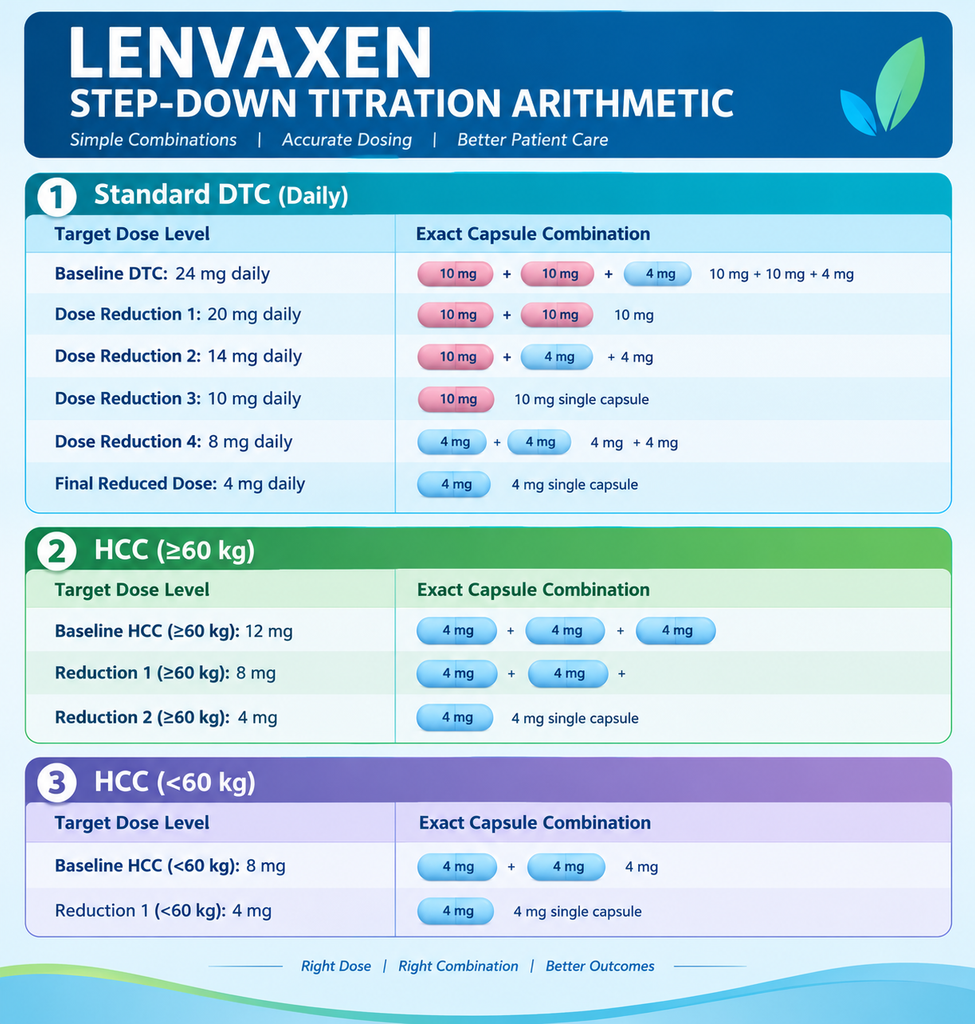
The availability of the 4 mg capsule prevents premature discontinuation of this life-extending therapy. By modulating the dose by 4 mg increments, oncologists can alleviate severe side effects (such as uncontrolled hypertension or debilitating hand-foot syndrome) while maintaining sufficient serum drug concentrations to continue suppressing tumor growth.
Dosing Guidelines & Administration Protocols
General Rules of Administration
- Schedule: Take Lenvaxen once daily, at roughly the same time every 24 hours. Consistent timing maintains steady-state plasma concentrations (Css).
- Food Compatibility: Can be taken with food or on an empty stomach. Food does not clinically alter the drug’s overall systemic bioavailability (AUC).
- Swallowing Whole: Capsules should ideally be swallowed whole with an 8-ounce glass of water. Do not crush, chew, or open the hard gelatin capsule shells under standard conditions.
What to Do If You Cannot Swallow Capsules (Dysphagia Protocol)
Many patients with advanced thyroid cancer or liver metastases experience swallowing difficulties. In strict alignment with validated pharmaceutical guidance, Lenvaxen capsules can be dissolved into a liquid suspension without crushing:

Missed Dose Guidance
- If you miss your scheduled dose, take it as soon as you remember that same day.
- The 12-Hour Cutoff Rule: If your next scheduled dose is less than 12 hours away, skip the missed dose completely and resume your normal dosing schedule the following day.
- Never take two doses at the same time or take extra capsules to make up for a missed dose.
Managing Side Effects: A Practical Patient Care Plan
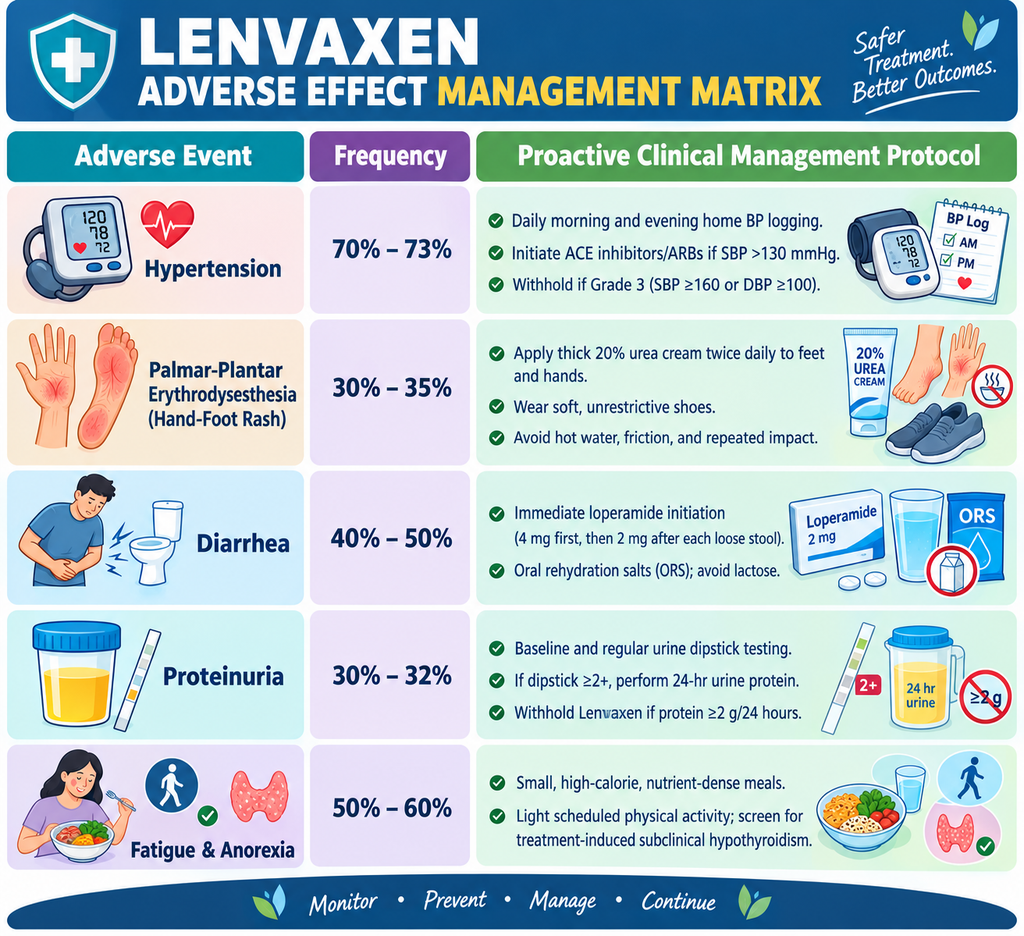
Because Lenvaxen acts on healthy blood vessels and cellular enzymes throughout the body, side effects are common. Clinical evidence demonstrates that proactive, early intervention allows patients to remain on treatment safely without sacrificing therapeutic benefits.
Emergency “Red Flag” Symptoms
Contact emergency medical services or your oncology triage team immediately if you experience:
- Severe, sharp abdominal pain: May indicate gastrointestinal perforation or fistula formation.
- Chest pain, sudden shortness of breath, or numbness on one side of the body: Potential signs of arterial thromboembolism, myocardial infarction, or ischemic stroke.
- Severe headaches, altered mental status, visual confusion, or seizures: Characteristic indicators of Reversible Posterior Leukoencephalopathy Syndrome (RPLS / PRES).
- Unusual bruising, coughing up blood, or black, tarry stools: Signs of hemorrhagic complications.
Landmark Clinical Trial Evidence (SELECT, REFLECT, CLEAR)
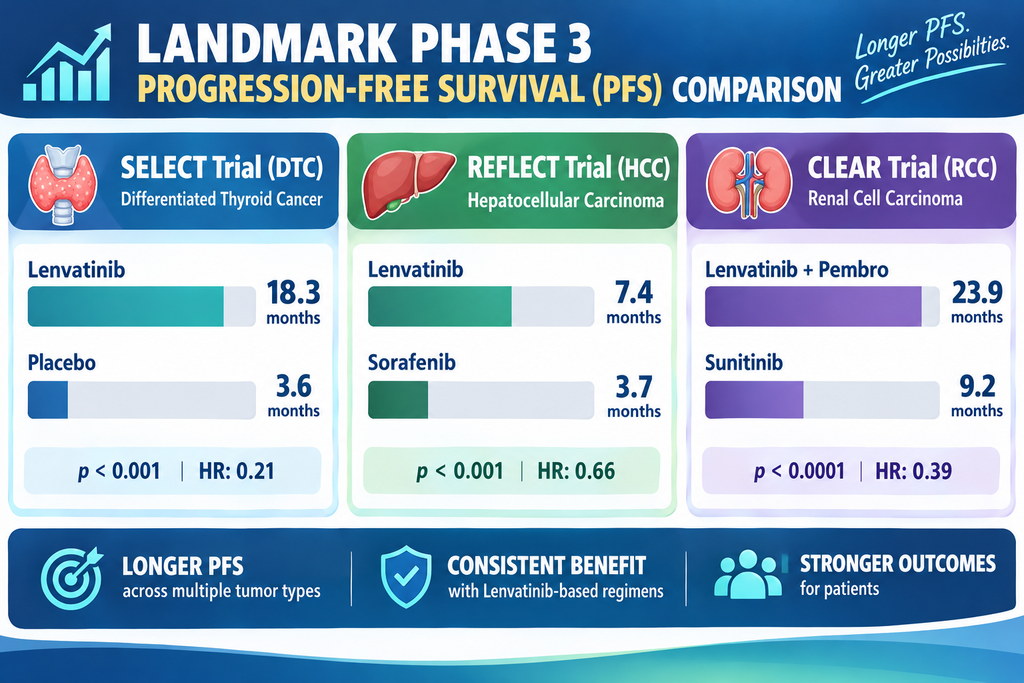
The therapeutic utilization of Lenvaxen (lenvatinib) across its primary indications is supported by Phase 3 randomized, double-blind clinical trials published in leading medical journals.
The SELECT Trial (Differentiated Thyroid Cancer)
- Published in: The New England Journal of Medicine (NEJM)
- Trial Design: 392 patients with progressive, RAI-refractory differentiated thyroid cancer were randomized (2:1) to receive lenvatinib 24 mg once daily or matching placebo.
- Key Findings:
- Progression-Free Survival (PFS): Median PFS was 18.3 months in the lenvatinib group compared to 3.6 months in the placebo arm (Hazard Ratio [HR] = 0.21; 95% CI, 0.14 to 0.31; p<0.001).
- Objective Response Rate (ORR): 64.8% of lenvatinib patients had significant tumor shrinkage (complete or partial response), compared to only 1.5% in the placebo group.
The REFLECT Trial (Hepatocellular Carcinoma)
- Published in: The Lancet
- Trial Design: An open-label, international, multicenter Phase 3 non-inferiority trial comparing lenvatinib (weight-based: 12 mg or 8 mg daily) against sorafenib (400 mg twice daily) in 954 patients with unresectable HCC.
- Key Findings:
- Overall Survival (OS): Demonstrated non-inferiority with median OS of 13.6 months for lenvatinib versus 12.3 months for sorafenib (HR = 0.92; 95% CI, 0.79 to 1.06).
- Secondary Endpoints: Lenvatinib delivered a statistically significant doubling of PFS (7.4 months vs. 3.7 months) and a nearly threefold higher ORR by mRECIST criteria (24.1% vs. 9.2%).
The CLEAR Trial (Renal Cell Carcinoma)
- Published in: The New England Journal of Medicine (NEJM)
- Trial Design: 1,069 patients with previously untreated advanced RCC were randomized to lenvatinib plus pembrolizumab, lenvatinib plus everolimus, or sunitinib monotherapy.
- Key Findings:
- Lenvatinib + pembrolizumab produced a median PFS of 23.9 months compared to 9.2 months with sunitinib (HR = 0.39; 95% CI, 0.32 to 0.49; p<0.0001).
- Median overall survival was significantly longer with the combination, lowering the overall risk of death by 34%.
Drug-Drug Interactions & Safety Precautions
Pharmacokinetic Profile & Interactions
Unlike many other oral targeted kinase inhibitors that rely heavily on the cytochrome P450 3A4 (CYP3A4) pathway, lenvatinib is metabolized through both enzymatic oxidation (CYP3A4) and non-enzymatic hepatic clearance mechanisms (aldehyde oxidase and glutathione conjugation).
- CYP3A4 Modulators: Lenvaxen can be co-administered with CYP3A4 inhibitors (e.g., ketoconazole) or inducers (e.g., rifampin) without mandatory empirical dose adjustments, offering greater flexibility when prescribing supportive medications.
- QTc Prolonging Medications: Lenvatinib can prolong the cardiac QTc interval. Exercise clinical caution when co-prescribing with antiarrhythmic agents (e.g., amiodarone, sotalol), psychotropic medications (e.g., citalopram, haloperidol), or fluoroquinolone antibiotics. Baseline and periodic electrocardiograms (ECGs) and electrolyte panels (potassium, magnesium, calcium) are strongly advised.
Special Populations & Contraindications
- Pregnancy & Reproductive Safety: Lenvatinib is teratogenic and embryotoxic. Women of reproductive potential must use highly effective, non-hormonal contraception during therapy and for at least 30 days following the final dose.
- Lactation: Nursing mothers must discontinue breastfeeding throughout treatment and for at least one week following the last administered dose.
- Surgical Interventions: Because VEGF pathway inhibition severely impairs wound healing, withhold Lenvaxen for at least 1 week before elective major surgery or dental procedures. Resume therapy no sooner than 2 weeks post-surgery, conditional on verified wound healing.
- Severe Renal or Hepatic Impairment: In end-stage renal disease (CrCl <30 mL/min) or severe hepatic impairment (Child-Pugh C), the recommended reduced starting dose is 14 mg daily in DTC and 10 mg daily in RCC/EC.
Lifestyle, Dietary, and At-Home Care Strategies
Supporting your body while taking Lenvaxen 4 mg involves daily self-care strategies that help prevent treatment interruptions.
- Maintain a Blood Pressure Diary: Check your blood pressure each morning and evening using an automated, calibrated upper-arm cuff. If your systolic pressure exceeds 130 mmHg or diastolic exceeds 80 mmHg on two consecutive readings, alert your doctor to adjust your antihypertensive medication.
- Skin Barrier Preservation: Protect your hands and feet against shear forces. Wear thick cotton socks, avoid tight shoes, and apply a 20% to 30% urea cream at least twice daily.
- Oral Health and Stomatitis Care: Rinse your mouth several times daily with an alcohol-free, baking-soda-and-salt oral rinse. Use an ultra-soft toothbrush to protect fragile mucous membranes.
- Hydration and Nutrition: Targeted therapies increase renal filtration stress. Drink 2 to 3 liters of fluids daily (water, broths, electrolyte formulas). If appetite wanes, incorporate high-protein nutritional shakes.
Authenticity, Quality Standards & Sourcing Generic Lenvima
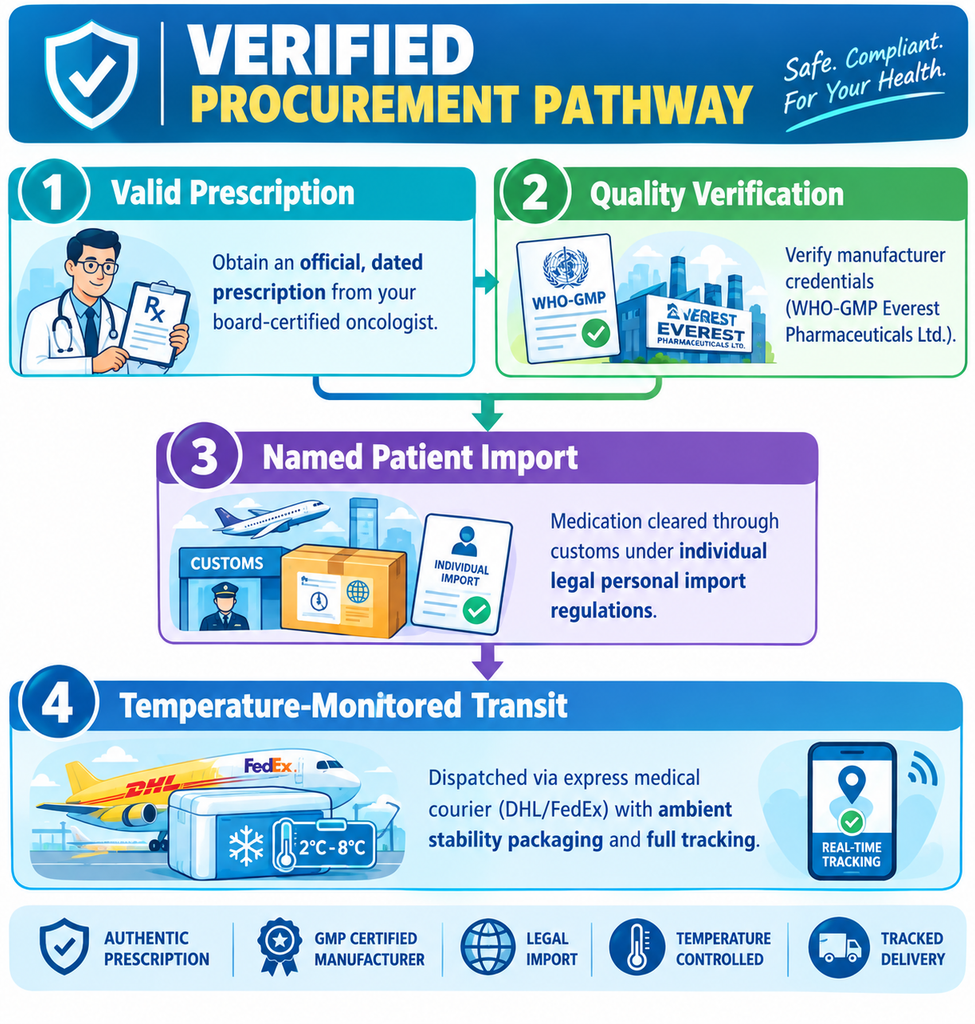
Accessing generic lenvatinib through verified international channels allows patients to maintain treatment continuity without excessive financial burden. However, purchasing oncology medications globally requires strict quality and regulatory diligence.
Bioequivalence of Everest Lenvaxen
Manufactured in Bangladesh by Everest Pharmaceuticals Ltd., a WHO-GMP-certified high-containment oncology facility—Lenvaxen is synthesized to match innovator Lenvima in active chemical identity, dissolution kinetics, and systemic bioavailability. Each batch undergoes High-Performance Liquid Chromatography (HPLC) testing to confirm impurity profiles remain safely below the 0.1% international pharmacopeial limits.
Sourcing Checklist for Patients & Caregivers
When ordering Lenvaxen 4 mg online:
- Prescription Requirement: Legitimate, ethical pharmacies will always demand a valid oncologist prescription. Avoid vendors offering prescription oncology drugs without medical verification.
- Batch Verification & Packaging: Inspect packaging upon arrival. Authentic Lenvaxen comes in tamper-evident sealed HDPE bottles featuring crisp manufacturer typography, explicit batch lot numbers, manufacturing dates, and expiration coding.
- Room Temperature Stability: Lenvaxen does not require refrigerated cold-chain shipping. It remains stable at controlled room temperatures (20∘C to 25∘C or 68∘F to 77∘F). Ensure the parcel is shielded from extreme humidity and direct sunlight during transit.